There is usually a great deal of excitement surrounding a person’s first drive alone.
The licence is finally in their hand. The passenger seat is empty. There is no instructor giving directions and no parent quietly reaching for an imaginary brake. For the first time the driver decides where to go, which route to take and when to return.
It might be a short trip to the shops or a drive to see a friend. To everyone else it is an ordinary journey. To the person behind the wheel it represents something much bigger.
Freedom has just become real.
The last drive is different.
It may not be planned and nobody may recognise it as significant at the time. The driver parks the car, turns off the engine and walks away without knowing that they may never sit behind the wheel again.
There is no celebration and rarely a photograph. Yet the last drive can change a life just as profoundly as the first.
Two ends of the same road
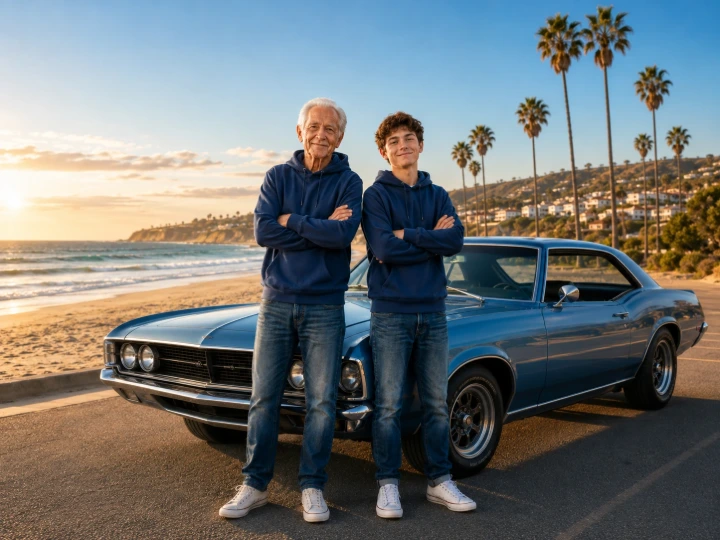
As a driving instructor and accredited older driver assessor I work with people at both ends of their driving lives.
I sit beside young learners who are discovering independence and older drivers who are working hard to preserve it.
At first these situations appear completely different. One person is moving towards a licence while another may be wondering how much longer driving will remain part of their life.
But underneath they share many of the same questions.
Am I still capable?
Can I make safe decisions?
Do other people trust me?
What happens if I make a mistake?
Who am I if I cannot do this?
For a young learner driving represents entry into a larger world. It can mean employment, education, friendships and the ability to make plans without relying on someone else.
For an older person driving may represent something equally important. It can mean continuing to shop independently, attending medical appointments, visiting family and remaining connected with a community built over many years.
At both stages the discussion is about much more than operating a vehicle.
It is about trust, identity and belonging.
A licence is more than a card
People who have driven for decades can easily forget how extraordinary that first independent journey felt.
A driver’s licence changes the boundaries of a person’s life. Distance becomes easier to overcome. Opportunities that once depended on parents, friends or public transport suddenly become accessible.
Over time that freedom becomes so familiar that it can feel permanent.
The car sits outside. The keys are nearby. If something needs to be done the driver simply gets in and goes.
That routine can continue for decades.
This is why conversations about an older person’s driving can become emotionally difficult. A family member may believe they are raising a practical safety concern. The older driver may hear something much more personal:
We no longer trust your judgement.
You are becoming dependent.
Your world is about to get smaller.
The concern may be genuine and necessary but the emotional meaning should not be ignored.
When driving has been part of someone’s adult identity for most of their life the possibility of losing it is not merely an inconvenience. It can feel like losing part of themselves.
Age alone does not tell the story
Driving ability does not disappear on a particular birthday.
People age differently. Some older drivers remain observant, capable and appropriately cautious. Others may experience changes in vision, movement, concentration or decision making that affect their safety.
The purpose of an assessment should never be to catch someone out or to confirm an assumption based only on age. It should provide a fair and realistic picture of how that person is driving now.
That distinction matters.
An assessment is not a judgement on the value of the person or everything they have achieved across a lifetime. It is an examination of whether they can currently manage the demands of driving safely.
Sometimes the result provides reassurance. Sometimes it identifies habits or skills that can be improved. Occasionally it confirms that driving has become unsafe.
Whatever the outcome the person deserves to be treated with honesty, patience and dignity.
The courage to begin
Young learners are often told to be confident but confidence is not the starting point.
Confidence usually comes later.
At the beginning there may be uncertainty, hesitation and fear of making mistakes. The learner must accept instruction, tolerate discomfort and practise tasks that do not yet feel natural.
That takes courage.
A good learner does not pretend to know everything. They ask questions, accept feedback and gradually take greater responsibility for their decisions.
The goal is not simply to produce someone who can pass a test. It is to help create a driver who understands that learning continues long after the test is over.
The safest drivers are not necessarily those who feel the most certain. They are often the people who continue to notice, question and adapt.
The courage to reconsider
There is also courage at the other end of the driving journey.
It takes courage to consider whether familiar skills have changed. It takes courage to accept an assessment when the outcome matters deeply. It takes courage to listen when family members express concern.
None of this means that every older driver should stop driving. It means that honest self assessment remains part of responsible driving at every age.
A learner shows maturity by recognising what they cannot yet do safely.
An experienced driver shows the same maturity by recognising when something has become more difficult.
These are not signs of weakness. They are expressions of responsibility.
What happens between the first and last drive?
Between those two journeys there may be thousands of ordinary trips.
There are drives to work, school pickups, family holidays, late night emergencies and quiet Sunday mornings. There are familiar streets travelled so often that every corner seems to be remembered by the body.
A person may drive children to their first day of school and years later teach those same children to drive. Eventually those children may become the passengers offering help, reassurance or concern.
The roles change almost without anyone noticing.
This is one reason driving carries such emotional weight. It is woven into the story of a life.
A map can show where a road begins and ends. It cannot show who sat beside us, what we were thinking or why that particular journey mattered.
Safety and dignity belong together
Road safety must remain the priority. A driver who can no longer manage the demands of the road may place themselves and others at risk.
But safety does not require us to abandon compassion.
We can have honest conversations without humiliation. We can assess ability without making assumptions. We can prepare for changes before a crisis forces the decision.
Where appropriate this may mean refresher training, changing when or where someone drives or finding practical alternatives that preserve connection and independence.
It also means recognising that the person at the centre of the conversation has a voice.
The best outcome is not simply the one that removes risk. It is the one that addresses risk while respecting the individual affected by the decision.
More than passing and stopping
We often describe driving as a collection of technical abilities: steering, braking, observing, positioning and responding to hazards.
Those skills matter enormously but they do not tell the whole story.
Driving asks us to make decisions that affect strangers. It requires patience when we are frustrated and restraint when we could take a risk. It reveals how we respond to pressure, uncertainty and change.
The first drive is not merely the beginning of operating a car.
The last drive is not merely the end.
They are two moments that remind us what driving has always represented: freedom balanced by responsibility.
For the new driver the task is to earn that freedom.
For the experienced driver the task is to keep evaluating how safely it can be exercised.
For families, instructors and assessors the responsibility is to support both journeys with honesty and respect.
We celebrate the first drive because a new part of life is opening.
Perhaps we should also give more thought to the last drive and to the years of independence, responsibility and memories that came between them.
Because every driver begins as someone who needs guidance.
And every driver, if fortunate enough to travel the road for long enough, will eventually need understanding.
There is usually a great deal of excitement surrounding a person’s first drive alone.
The licence is finally in their hand. The passenger seat is empty. There is no instructor giving directions and no parent quietly reaching for an imaginary brake. For the first time the driver decides where to go, which route to take and when to return.
It might be a short trip to the shops or a drive to see a friend. To everyone else it is an ordinary journey. To the person behind the wheel it represents something much bigger.
Freedom has just become real.
The last drive is different.
It may not be planned and nobody may recognise it as significant at the time. The driver parks the car, turns off the engine and walks away without knowing that they may never sit behind the wheel again.
There is no celebration and rarely a photograph. Yet the last drive can change a life just as profoundly as the first.